The funding, part of ARIA’s three-year, £50 million Universal Fabricators Programme, will support 11 research teams aiming to harness proteins as a 'universal fabricator'. The programme's core concept is that proteins can be employed to construct sophisticated materials.
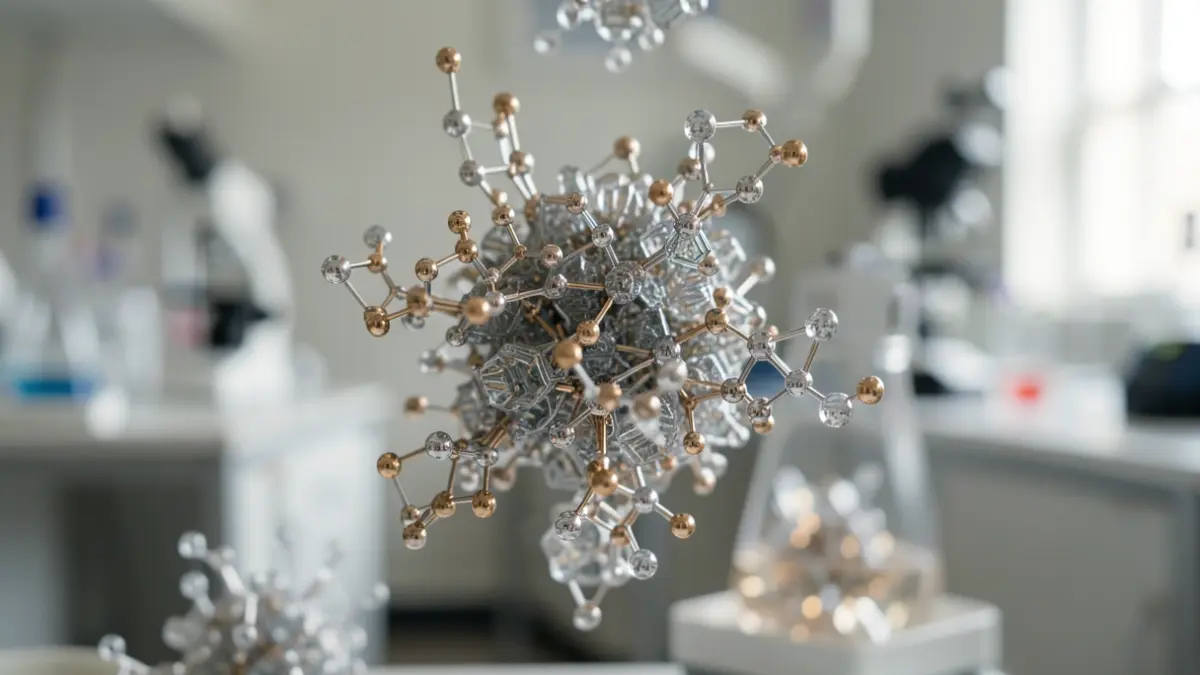
Led by Professor Ronan Daly from Cambridge’s Institute for Manufacturing, the ‘Protein SPARK’ project will utilise proteins, likened to 'tiny Lego bricks', to develop magnets that do not require costly rare-earth elements. The initiative also aims to create advanced electrodes for batteries, promising increased charge capacity and longevity.
The team's innovative 'Droplet Lego' method draws inspiration from biomineralisation, the natural process by which organisms create hard materials like bones and teeth. This method is adapted for a continuous production line where microscopic droplets containing designed proteins and elements are sprayed and printed into precise positions, akin to inkjet printing. The proteins then guide the growth and shaping of constituent materials into nanocrystals, films, and three-dimensional structures, allowing for control over both form and function during material formation.
Professor Daly highlighted the ubiquitous nature of magnets in modern technology, from headphones and mobile phones to motors and wind turbines. He noted the environmental and resource challenges associated with rare-earth materials commonly used in magnets. "Our project, which is at its heart a manufacturing project, will instead use proteins to drive growth of useful magnetic materials without using rare earth materials anywhere," he stated. The team plans to explore applications for other products, such as faster-charging and longer-lasting batteries.
The 'Protein SPARK' project team includes Professor Michael De Volder, Professor John Durrell, and Dr Sebastian Pattinson from the Department of Engineering; Professor Ljiljana Fruk from the Department of Chemical Engineering and Biotechnology; and Professor Tuomas Knowles from the Yusuf Hamied Department of Chemistry. Collaborators also include researchers from the University of Amsterdam and the University of Liverpool.
Cambridge researchers are also contributing to two other projects within the Universal Fabricators Programme. The Protein Organised Engineered Materials (POEM) project, led by the University of Washington, involves Dr Shijing Sun and Dr Zuyang Ye from Cambridge’s Department of Materials Science and Metallurgy, alongside Professor Tuomas Knowles, Josie Forsythe, Hannah Han, and Max Gao from the Yusuf Hamied Department of Chemistry. This project aims to develop high-performance magnets by using specially designed proteins to control the growth and arrangement of magnetic crystals, potentially leading to more powerful and reliable magnets for future technologies.
Dr Sun commented, "Using proteins as templates to assemble inorganic materials could open up new processes for making a next generation of rare-earth-free magnets. Our team in Cambridge brings high-throughput methods to that search, so that protein design, materials chemistry and automated experimentation work together as one."
Furthermore, Professor Erwin Reisner from the Yusuf Hamied Department of Chemistry is involved in the S-LATTICE project, led by the University of Edinburgh. This project focuses on creating new materials by combining self-assembling proteins with metals to form large, highly ordered sheets with unique properties. Potential applications include precise filtration, carbon dioxide conversion, cleaner catalysis, and light-interactive technologies.
The Universal Fabricators Programme is overseen by Ivan Jayapurna.