Bury St Edmunds to Unveil First Memorial to Witch Trial Victims
A new sculpture and historical reenactment will commemorate those persecuted during a dark period of local history.
By Rebecca Flint
••3 min read
AI
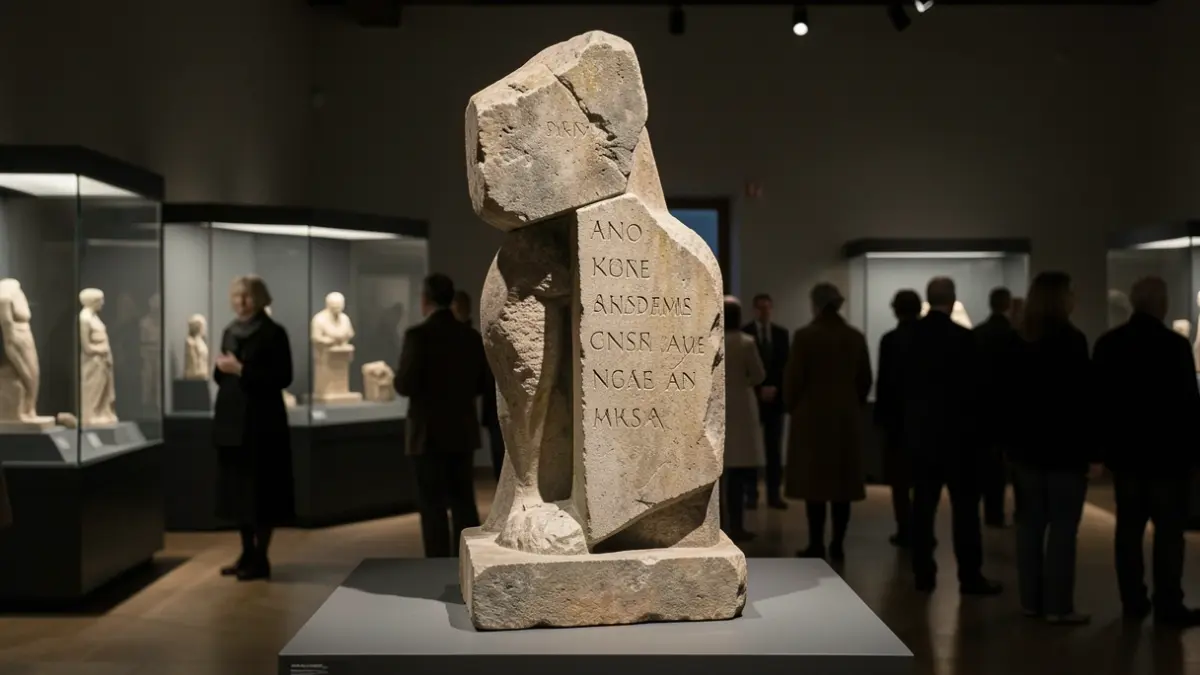
Generic image of a symbolic sculpture with carved names in a museum setting.
Bury St Edmunds, a town with a history of witch trials, is set to unveil its first commemorative sculpture honouring victims, funded by the Bury Society and West Suffolk Council.
A new commemorative sculpture will be installed in Bury St Edmunds to honour the victims of the town's historical witchcraft trials, a period spanning from 1599 to 1694. The sculpture will display the names of all known victims, including 16 women and 2 men, one of whom was a vicar, who were hanged in a single day in 1645. This initiative is part of a broader heritage project supported by over £15,000 in funding from the Bury Society and West Suffolk Council.
Designed by local artist Kate Jackson and crafted by Suffolk wood carver John Williams, the sculpture is scheduled for display at Moyse’s Hall Museum by the end of the month. The museum, run by West Suffolk Council, houses a 310-year-old book detailing the 1662 trial of Rose Cullender and Amy Denny, a trial that influenced the later Salem Witch Trials in the United States.
The 1662 trial of Rose Cullender and Amy Denny will be brought to life through public performances at The Guildhall in Bury St Edmunds in February. Magic Floor Productions will stage four public shows and four performances for local schools. This project signifies a move towards greater collaboration between the museum, artists, heritage sites, and educational institutions.
“
"The witch trials were a moral panic that led to thousands of people being persecuted and executed across England, Europe and the United States. What happened in Bury St Edmunds was a part of that dark and brutal history and shouldn’t be forgotten."
Cllr Ian Shipp, Cabinet Member for Leisure and Culture at West Suffolk Council, expressed delight at the support from the Bury Society for both the sculpture and the upcoming performances. He highlighted the society's role in securing the historic book and their continued assistance.
“
"The Bury Society CIO is delighted to be able to help with such a major community and heritage initiative. We are particularly pleased to help fund both the enduring sculptural aspects of the project as well as the public and school performances in the Guildhall; an opportunity to highlight how playing on insecurity, fear and jealousy, can lead to shameful, tragic consequences."
The Friends of Moyse’s Hall Museum also contributed £500 to the project, which includes new display panels for the museum's Crime and Punishment section. West Suffolk Council is investing in the long-term care of these displays.
“
"Today it’s easy to accept the commercialised festivities of Halloween as innocent fun, but in 17th century Bury St Edmunds, fear of witches was real and superstition claimed numerous lives. Events here led to other persecutions, notably the witch trials in Salem, Massachusetts. While attention often focuses on the witch finders and their dubious methods, less is known about their victims, persecuted as a result of fear, envy and greed. This project aims to redress the balance by concentrating on the so-called witches: their lives and experiences. The Friends of Moyse's Hall are delighted to support this important project. The victims deserve our attention, and their story needs to be told."
Based on information from the official source: West Suffolk Council (13/10/2026)