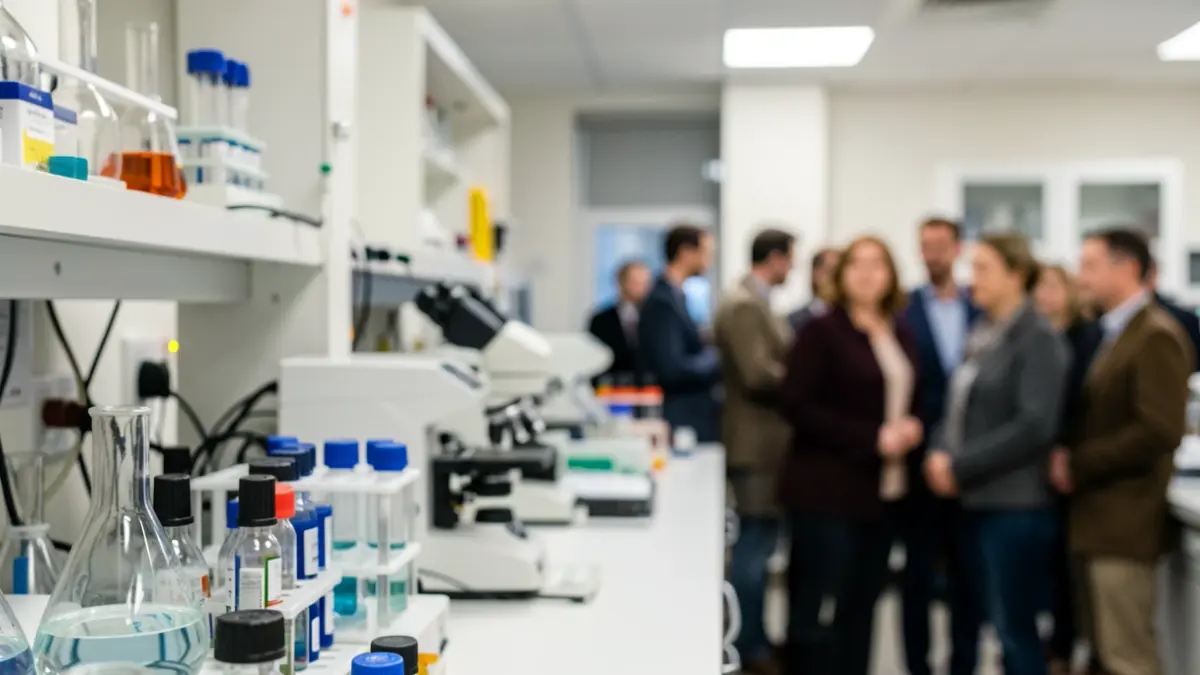

The University of Cambridge hosted its fifth Innovate Cambridge Summit, drawing more than 500 businesses, start-ups, innovators, academics, and civic leaders. The event celebrated a successful year for innovation in Cambridge, marked by the creation of three new Cambridge-born unicorns and a strong emphasis on innovation-led growth to benefit the city and the wider region.
New analysis from Cambridge Innovation Capital (CIC) revealed that the average equity raised per deal in life sciences and deep tech has increased five-fold over the past decade. Early-stage companies based in Cambridge have collectively raised £9.1 billion during this period.
Professor Deborah Prentice, Vice-Chancellor of the University of Cambridge, highlighted the factors contributing to Cambridge's thriving innovation economy, including research excellence, a cohesive ecosystem, and strong external partnerships. These themes were echoed by speakers such as Mayor Paul Bristow and Peter Freeman, Chair of the Greater Cambridge Development Corporation.
The summit also focused on strengthening the life sciences sector. Tony Wood, Chief Scientific Officer at GSK, spoke about the importance of collaboration as the company prepares to move its R&D headquarters to Cambridge in 2029, aiming to accelerate breakthroughs in drug discovery.
Discussions on quantum computing explored the UK's global leadership role. John Aston, Pro-Vice-Chancellor for Research at the University of Cambridge, noted the university's partnership with IonQ, which will bring the UK's first commercial-scale quantum computer to Cambridge next year. This, combined with research strengths and ecosystem support, positions Cambridge for national and global leadership in the field.
The success of the partnership between Cambridge and Manchester was presented by Faye Holland, Director of the Cambridge x Manchester Partnership, highlighting its role in enhancing UK's global competitiveness. This model is now being adopted by other city partnerships.
A new task force, announced by Pascal Levensohn, Chair of the Cambridge Innovation Hub Global Advisory Board, will explore strategies to ensure start-ups grow and remain in the UK. This initiative is informed by a white paper outlining a new approach to maintaining a company's UK footprint, even after international acquisition.
Successful start-ups including Nyobolt, T-Therapeutics, Pragmatic Semiconductors, Cambridge Aerospace, and CuspAI shared their experiences. The summit also saw the announcement of Included, a new initiative aimed at creating more opportunities for young people in Greater Cambridge through workplace visits, work experience, and mentoring.
In a parallel session, experts discussed accelerating the UK's clean energy transition. Hosted by DESNZ, Innovate Cambridge, and Cambridge Zero, and chaired by Professor Emily Shuckburgh, Chief Scientific Adviser at DESNZ, the session focused on scaling cleantech innovation and commercialisation.