
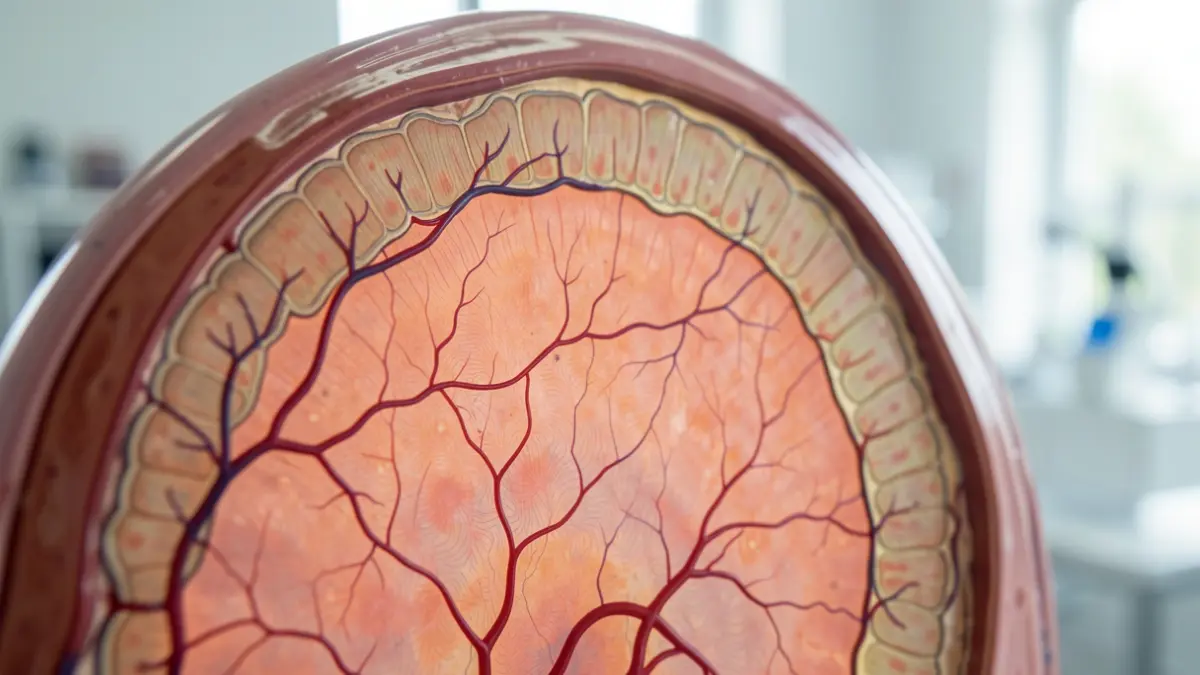
Researchers are investigating whether advanced eye scans can reveal information about diseases beyond the eye, particularly cardiovascular and neurological conditions. The retina, with its high energy demands and extensive blood supply, shares circulatory pathways with the rest of the body, making it a potential indicator of systemic health.
A recent study analysed retinal images and health records from large datasets, including the AlzEye and UK Biobank. The findings indicated that individuals with atrial fibrillation showed differences in several retinal layers and blood-vessel measurements compared to those without the condition. Notably, a thinner macular ganglion cell-inner plexiform layer was associated with a higher risk of developing atrial fibrillation later.
The study found that a decrease in the thickness of this inner retinal layer was associated with a 27% higher risk of atrial fibrillation, even after adjusting for various health factors. This suggests that eye scans, already used for eye health, could potentially offer additional information for cardiovascular health investigations.
The attraction is clear. Retinal imaging is non-invasive and is already widely used in eye-care settings. If future research establishes that particular retinal features can reliably identify people at higher cardiovascular risk, information contained in scans taken for other reasons could potentially help doctors decide who needs further investigation.
While the findings are promising, researchers caution that the study was observational and cannot establish causality. Further research is needed to determine if retinal imaging can reliably predict atrial fibrillation and if it adds valuable information to existing diagnostic methods. Currently, diagnosis requires evidence of abnormal heart rhythm, typically via an electrocardiogram (ECG).
This research is part of the growing field of 'oculomics', which explores how eye images can reveal signs of health and disease elsewhere in the body. While retinal imaging shows potential for identifying individuals at higher cardiovascular risk, its role in screening and prediction remains uncertain.