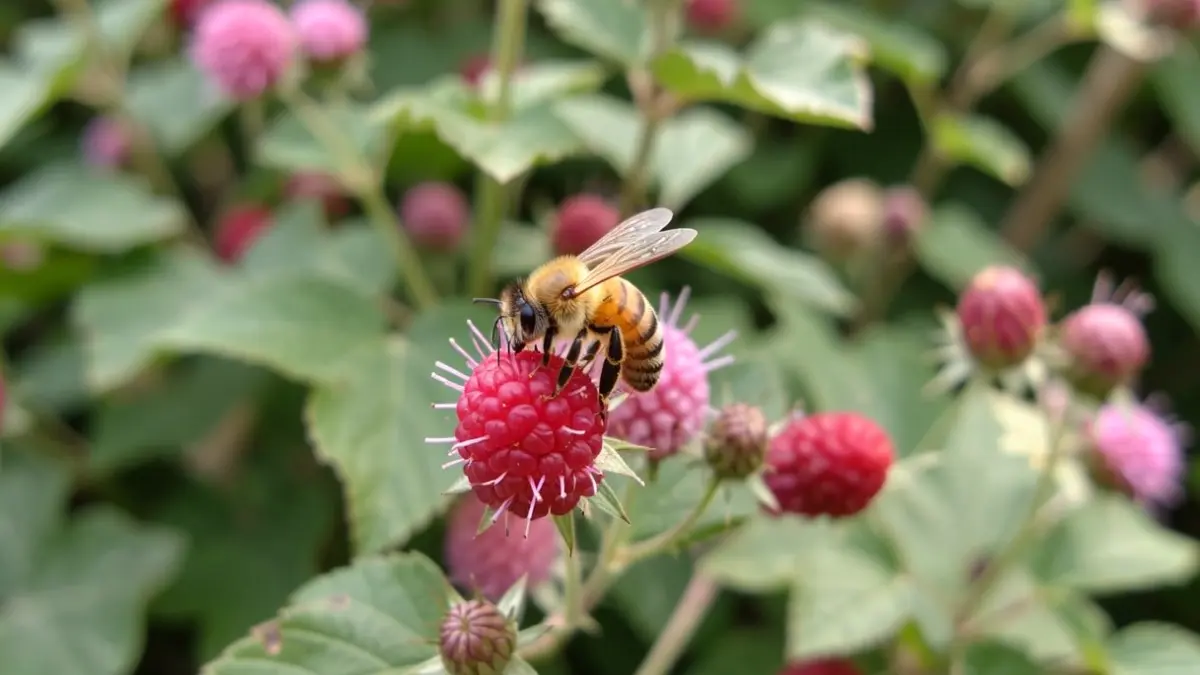
New research, led by scientists at Anglia Ruskin University (ARU), has provided the first evidence of the extent to which honeybees dominate wild pollinators when competing for food. The study, conducted over two years at five sites near Cambridge, focused on insects foraging on bramble and ivy, both vital nectar and pollen sources.
Researchers observed interactions between honeybees, bumblebees, solitary bees, hoverflies, butterflies, beetles, and wasps. They recorded instances where one pollinator disrupted or prevented another from accessing a flower, categorising outcomes as a ‘win’, ‘loss’, or ‘share’. The findings indicated that higher densities of honeybees were linked to fewer wild pollinators and more competitive interactions, with honeybees winning the majority of encounters.
On bramble, a doubling of honeybee density correlated with a 14% reduction in bumblebee numbers. Similarly, on ivy, increased honeybee presence led to fewer solitary bees and hoverflies. Honeybees often won resources by chasing rivals away, with other pollinators actively avoiding them in 28% of interactions on bramble and 36% on ivy.
Aggressive interactions were predominantly initiated by honeybees. The ivy bee, a non-native solitary bee, was the only species observed contesting interactions, defending its food source by displacing and chasing honeybees. This behaviour was observed for the first time.
The study, published in Ecological Entomology, is part of a broader effort to mitigate competition between pollinator species. With the number of UK honeybee hives increasing significantly, researchers suggest climate change could intensify this competition. Higher temperatures were associated with more competitive interactions, potentially due to reduced nectar production by flowers and differing responses to heat among pollinators.
Lead author Victoria Buckle, a PhD student at ARU, stated that the study aims to understand competition to help conserve wild pollinators. "We found that most interactions when competing for food were instigated by honeybees and they had a greater number of ‘wins’, resulting in a loss of forage for other pollinators," she explained. "Bumblebees, solitary bees and hoverflies would avoid, be displaced by and on some occasions be chased off by honeybees."
"An interesting exception was the ivy bee, which would win contests more often against honeybees," Buckle added. "However, honeybees outcompeted all other wild pollinators and based on our findings, future predicted warming in the UK is only likely to further exacerbate interference competition from dominant honeybees. Therefore, it’s important to find ways to ensure honeybees and wild pollinators can continue to coexist, particularly in locations with a high density of hives, such as urban areas."