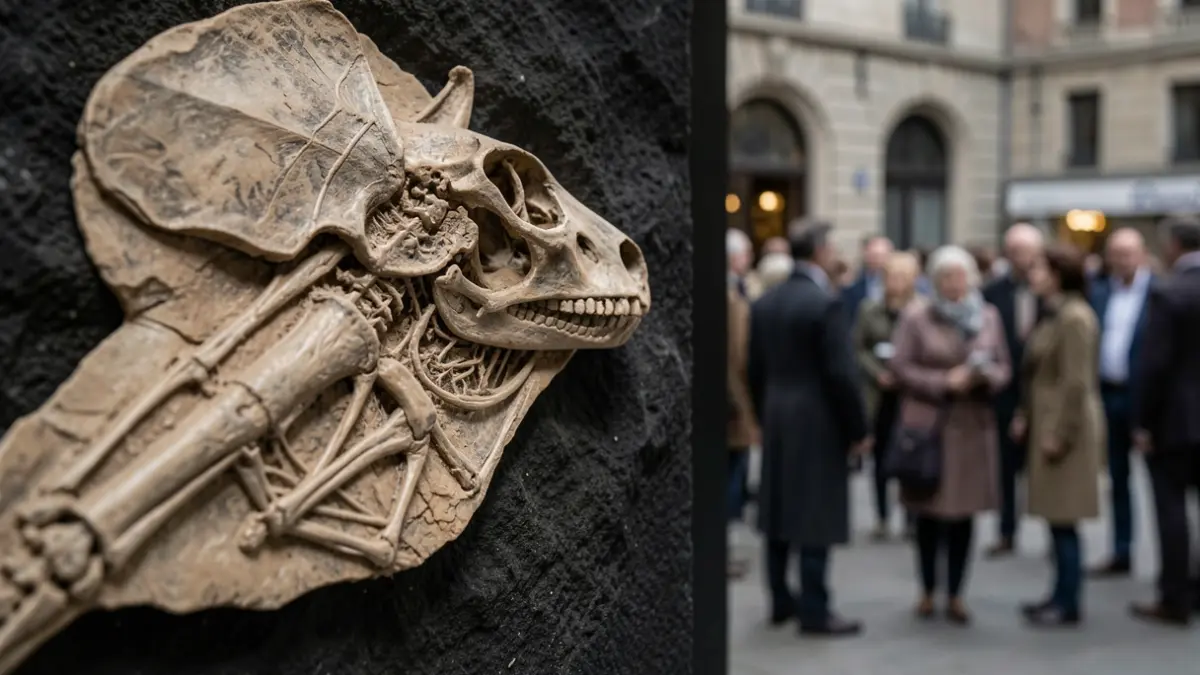
The fossil record of animal life on Earth is highly incomplete, with hard body parts like shells and bones being far more likely to be preserved than soft tissues such as muscles, organs, and skin. However, fossils from the late Ediacaran Period (between 579 and 539 million years ago) often display extraordinary detail, despite the absence of hard body parts in these early complex animals.
For decades, scientists have debated the mechanisms behind this common preservation of soft tissues. While theories involving unusual ocean chemistry, different tissue compositions, or microbial slime layers have been proposed, none have universally explained the phenomenon. The new study, published in Current Biology, points to the evolution of microbes producing collagen-eating enzymes, known as collagenases.
Collagen, a structural protein, provides strength and support to animal tissues. Once an organism dies, collagenases can rapidly break down these tissues, significantly reducing the chances of preservation. Lead author Philip Vixseboxse, from Cambridge’s Department of Earth Sciences, likened the persistence of collagen without breakdown enzymes to modern plastic, stating, “You need an enzyme to break down a biopolymer, or else it will sit around for ages until something comes along that can actually eat it.”
The research team traced the evolution of collagenase genes in microbial organisms, finding that these enzymes predate animals and initially existed only in anaerobic microbes. In the oxygenated waters of the Ediacaran, dead organisms would have retained their collagen longer, allowing more time for fossilisation. However, around the transition to the Cambrian Period, collagenases spread to aerobic bacteria, coinciding with a marked decrease in the fossilisation of soft-bodied animals.
“Around this critical time when these soft-bodied animals stopped fossilising, we start seeing the appearance of collagenases in aerobic bacteria,” explained Vixseboxse. “This shift meant that the ability to break down collagen-bearing tissues could spread into new environments as animal diversity accelerated, requiring faster fossilisation processes to outpace decay.”
While exceptional circumstances, such as rapid burial by sediment, can still preserve soft tissues in younger rocks, these instances are rare. Co-author Professor Alex Liu, also from Cambridge’s Department of Earth Sciences, suggested that this biological mechanism may have broadly shaped the fossil record of soft tissues throughout Earth’s history, with the acquisition of key enzymes by microbes impacting preservation potential.
The study, supported by the Leverhulme Trust, NERC, and BBSRC, draws parallels with modern plastic pollution, noting that just as collagen persisted until enzymes evolved to break it down, plastic polymers may eventually be exploited by future microbial enzymes.