
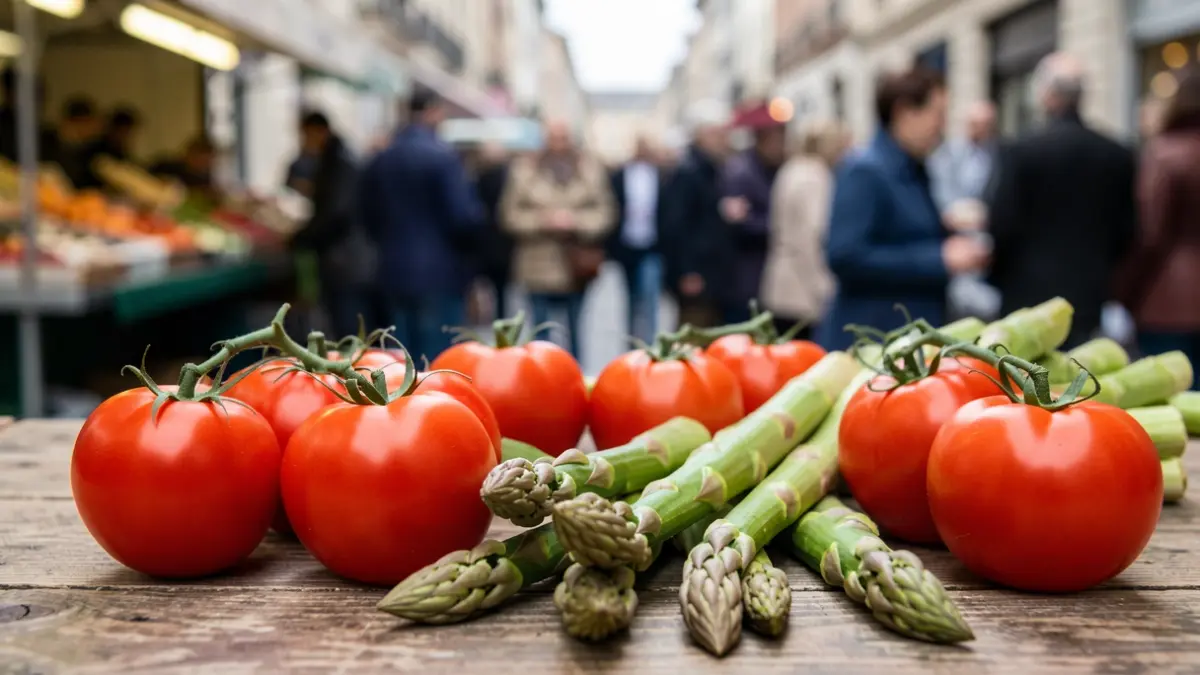
British supermarkets have accustomed consumers to the year-round availability of produce such as tomatoes, cucumbers, and asparagus, making seasonality seem less relevant. However, the underlying seasonal requirements for crops remain, necessitating either the recreation of specific growing conditions or sourcing from regions with suitable climates.
This winter, several cost factors are converging, potentially impacting the price and availability of familiar out-of-season vegetables. For tomatoes, maintaining sufficient light and warmth in commercial glasshouses requires significant energy for heating, supplementary lighting, ventilation, and humidity control. The addition of carbon dioxide can boost photosynthesis, but all these technological interventions consume energy.
The National Farmers’ Union highlighted in March 2026 that increased electricity network charges could add over £1 million annually to the bills of large glasshouse businesses. Growers face a dilemma: switching off systems can slow growth, delay harvests, and reduce yield or fruit quality. While UK tomato production saw a 4% increase in 2025 to 79,000 tonnes, largely due to favourable weather and softened energy prices, maintaining comparable output through winter presents distinct technical and economic challenges.
During winter, a larger proportion of the UK's tomato supply originates from southern regions. Spain and Morocco are becoming more significant suppliers as British and Dutch production declines, according to the government’s Food Security Report. Southern Spain's extensive plastic-covered greenhouses benefit from abundant sunlight and mild temperatures, requiring less artificial heating and lighting compared to UK glasshouses.
However, these advantages come with risks, including water scarcity in Spain and Morocco, and potential impacts on pollination and fruit quality from excessive heat. Storms, pests, and diseases can also affect market supply. In Almeria, Spain’s greenhouse hub, tomato output fell last winter amidst rising production costs. If multiple Northern European countries seek replacement supplies from these same regions, reduced availability can rapidly increase prices.
The hot, dry British summer of 2026 has further complicated matters. Some UK vegetable growers experienced reduced yields or required more irrigation, while certain vegetables needed earlier imports. This situation leaves less capacity for domestic production to absorb disruptions in international supply chains, although it does not directly dictate the price of every winter tomato.
Asparagus follows a different supply route, being a perennial field crop with a natural spring harvesting season in Britain. Midwinter availability relies on rapid transport from regions with different production seasons. In 2024, the UK imported approximately 10.5 million kilograms of fresh asparagus, with about 95% coming from Peru or Mexico. Disruptions in these distant supply chains cannot be easily replaced by immediate domestic or European production.
Figures from Peru for the first half of 2026 showed a nearly 8% decrease in fresh asparagus export volumes, despite an increase in total value. While exchange rates, supermarket contracts, and Mexican supplies also influence British retail prices, this trend highlights why consistently cheap winter asparagus should not be taken for granted. Its availability depends on distant production, refrigerated handling, and fast transport for a highly perishable product.
While cheap winter vegetables will still be available at times, influenced by mild winters, good harvests, lower energy prices, and robust supplies from multiple countries, the fundamental biological requirements of crops and the complexities of international trade mean that inexpensive availability is not guaranteed. Growers are implementing improvements such as thermal screens, LED lighting, and renewable energy, but the convergence of light, water, labour, and transport costs makes consistently low prices harder to justify.